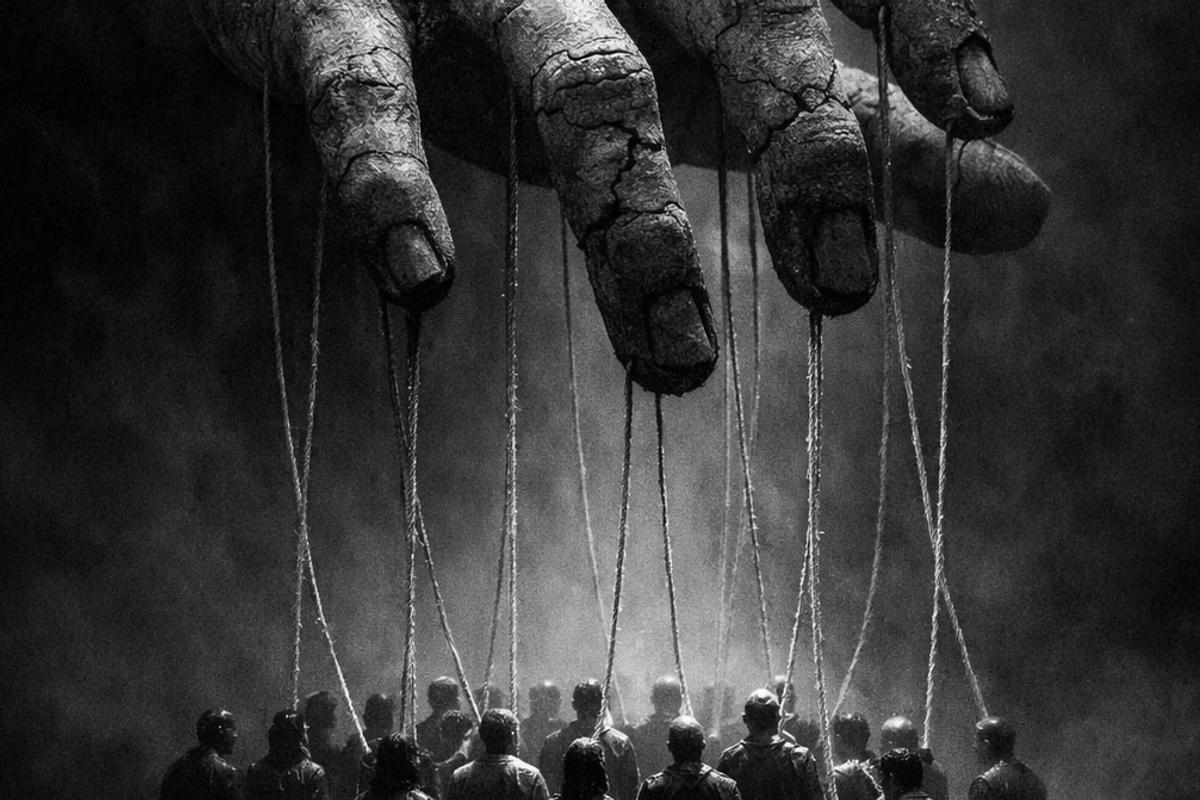



You Are Not Free
If your desires were engineered, how would you know. Most of what you call autonomy is compliance that feels voluntary. This essay examines how modern institutions shape belief, desire, and political identity.
Capitalism is not failing because it is inefficient. It is succeeding at efficiently exploiting human irrationality. What if much of what we “want” was never discovered by markets, but carefully manufactured by them?
Headlines and brief analysis

If your desires were engineered, how would you know. Most of what you call autonomy is compliance that feels voluntary. This essay examines how modern institutions shape belief, desire, and political identity.

Most people aren’t oppressed, they’re managed. We believe we live in democratic societies. But if most people cannot self govern at scale, democracy becomes management. Who does the managing?

A structural breakdown of how modern ideological capture happens and why it works. If you wanted to engineer belief at scale, where would you begin? A mechanism level breakdown of identity capture and mass persuasion.

Empathy, when applied prematurely, it dissolves the emotional tension that fuels ambition. The paradox is that the very discomfort empathy seeks to eliminate is often the raw material of creation.

Society confuses confidence with competence, rewarding certainty over understanding in a world defined by complexity. This ancient instinct has become one of the most damaging forces shaping modern leadership and policy.

Economic systems do not fail because people lack good intentions, they fail because of false assumptions about human behavior. This essay explores why systems that align incentives with real human nature endure.

Dependency is not a moral failing—it is an economic condition shaped by incentives. When systems reward reliance instead of responsibility, productivity erodes, agency diminishes, and prosperity becomes unsustainable.

Venezuela’s collapse is often framed as a moral tragedy or a warning about foreign involvement. In reality, it is an economic case study in how a wealthy nation was dismantled—and how it could be rebuilt.